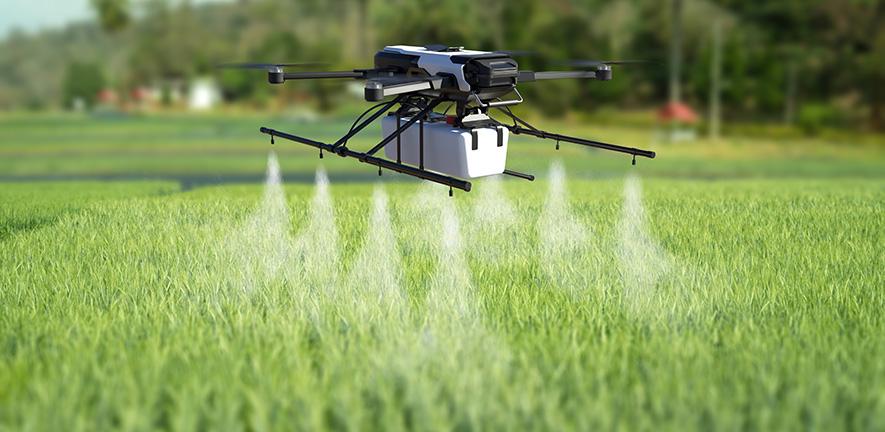
The Shift Toward Smart Farming
Modern farming is increasingly driven by data-informed decisions rather than guesswork. AI enables farmers to analyze patterns that would otherwise take years to notice:
Soil conditions
Weather patterns
Crop health
Pest behavior
By combining these variables, AI helps farmers act at the right time, in the right place, with the right resources.
1. Precision Agriculture: Doing More With Less
AI-powered precision agriculture allows farmers to optimize every square meter of their land.
How it works:
Sensors and drones collect data from fields
AI analyzes variations in soil moisture, nutrients, and plant health
Farmers receive recommendations on where to apply water, fertilizer, or pesticides
The advantage:
Instead of treating an entire field the same, farmers can target specific problem areas, improving overall yield efficiency.
2. Smart Irrigation Systems
Water management is one of the most critical factors in farming. AI can automate and optimize irrigation based on real-time conditions.
What AI does:
Monitors soil moisture levels continuously
Integrates weather forecasts to predict rainfall
Automatically adjusts watering schedules
Result:
This is especially valuable in regions facing water scarcity.
3. Early Pest and Disease Detection
One of the biggest threats to yield is late detection of pests and diseases. AI can identify problems before they become visible to the human eye.
Tools involved:
AI-powered image recognition (via smartphones or drones)
Field cameras and sensors
Predictive models based on historical data
Benefits:
Early intervention prevents crop loss
Reduced need for excessive pesticide use
Healthier crops and higher yields
Farmers move from reactive to proactive crop protection.
4. Weather Prediction and Risk Management
Weather is unpredictable—but AI is making it more manageable.
AI capabilities:
Hyper-local weather forecasting
Seasonal trend predictions
Risk alerts for extreme conditions
Impact:
Better planning for planting and harvesting
Reduced losses from unexpected weather events
Improved timing for fertilizer and pesticide application
AI turns uncertainty into calculated decision-making.
5. Automated Machinery and Robotics
AI-driven machinery is transforming labor-intensive tasks into efficient operations.
Examples:
Why it matters:
Even small farms can begin adopting semi-automated tools to boost productivity.
6. Data-Driven Crop Selection
AI can help farmers decide what to plant and when based on market demand and environmental conditions.
Insights provided:
Which crops perform best in specific soil types
Market trends and pricing forecasts
Crop rotation strategies for soil health
Outcome:
7. Accessible AI Tools for Farmers Today
Farmers don’t need complex systems to get started. Many AI tools are already available through:
Mobile apps for crop monitoring
Satellite imaging services
Smart sensors and IoT devices
Farm management software platforms
These tools are becoming more affordable and user-friendly, making AI accessible even to small-scale farmers.
Challenges to Consider
While AI offers major advantages, there are a few barriers:
Initial cost of technology
Need for basic digital literacy
Internet connectivity in rural areas
However, these challenges are gradually decreasing as technology becomes more widespread and affordable.
The Competitive Advantage
Farmers who adopt AI gain a significant edge:
Higher yields with fewer resources
Better resilience against climate and market changes
Improved decision-making speed and accuracy
In a competitive agricultural market, AI is quickly becoming the difference between surviving and thriving.